








Custom T-Shirt Printing in Gardner, Kansas – Screen Printing, DTF, DTG, and Personalized Apparel
Gardner occupies a distinctive place in Johnson County history. The community was established in 1857, but the surrounding landscape had already become nationally significant as a place where major nineteenth-century overland routes separated. Near present-day Gardner, travelers following a common corridor reached what is now known as Gardner Junction. Santa Fe Trail traffic continued southwest, while Oregon- and California-bound travelers turned northwest. Long before those routes carried large numbers of traders and emigrants, however, this part of Johnson County was connected with Shawnee people and a broader Indigenous history that cannot be separated from the story of later settlement.
That history provides an unusual framework for custom apparel: one starting design can produce several legitimate branches. A company may begin with one approved logo and develop employee, event, and promotional versions. A family can begin with one shared identity and create adult, youth, and personalized variations. A recreational group can maintain common artwork while individual names and numbers branch from it. The goal is not to make every garment identical. It is to know which branches belong to the same project and which have become separate designs with their own requirements.
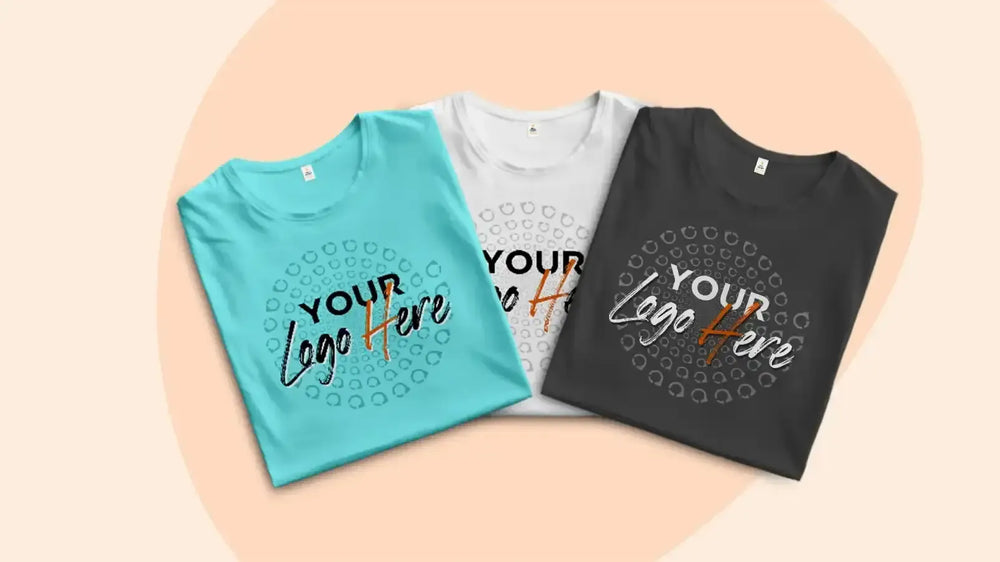
Custom One provides online custom t-shirt printing for customers and projects in Gardner, Kansas. Eligible orders can range from one custom T-shirt with no minimum to employee apparel, family shirts, recreational clothing, volunteer garments, creator merchandise, event apparel, and larger bulk custom T-shirt orders using original, licensed, or appropriately authorized artwork.
Begin with the Common Base before Creating Variations
A multi-version order is easier to control when the shared material is established first. That common base might be an authorized business logo, an original family emblem, an independent team identity, a creator's illustration, or an event title.
From there, the project can branch deliberately. One employee version might add STAFF. Another might add a department. A family project might divide into different surnames or family branches. A recreational project might create one version for every participant number. Merchandise could use the same illustration across tees, long sleeves, and hoodies.
The useful question is not whether every version looks exactly alike. Instead, determine which elements must remain common and which elements are intentionally different. That keeps variation from turning into accidental inconsistency.
Gardner Junction Was a Literal Place of Diverging Routes
Just outside Gardner, the Santa Fe, Oregon, and California trails shared a route before separating at a historically important junction. Travelers heading toward Santa Fe continued southwest. People bound for Oregon or California turned northwest. The National Park Service now interprets the approximate location at Gardner Junction Park near U.S. 56 and 183rd Street.
The groups using these routes did not all have the same purpose. Santa Fe Trail traffic was strongly associated with two-way commercial trade, while many Oregon and California Trail travelers were emigrants relocating west or people seeking opportunities connected with western settlement and gold discoveries.
That difference makes the junction more interesting than a generic covered-wagon image. Original historical apparel could use independently drawn branching lines, route typography, wagon-wheel geometry, directional concepts, or a creator-owned landscape photograph.
Official National Historic Trail logos, National Park Service marks, existing interpretive maps, exhibit graphics, professional photographs, and another illustrator's trail artwork should not automatically be reproduced on independent merchandise.
The Trail Story Crossed Shawnee Land
Gardner's nineteenth-century settlement history needs an important earlier context. Johnson County records explain that the county's territory was once part of the Shawnee Indian Reservation. Shawnee people had been forcibly displaced westward from earlier homelands, and communities established farms, homes, businesses, and other institutions in what became eastern Kansas.
By the middle of the nineteenth century, eastern Kansas contained numerous reservations associated with distinct Native nations, including Shawnee, Delaware, Wyandot, Ottawa, Wea, Miami, Potawatomi, Chippewa, Quapaw, Osage, Kickapoo, and others. The Kansa or Kaw also had deep connections with the wider region from which Kansas ultimately received its name.
The Kansas-Nebraska Act of 1854 and treaty changes accelerated non-Native settlement. Shawnee lands were reduced and divided, and subsequent policies contributed to additional displacement. Some Shawnee families remained in Johnson County for a period, while many ultimately moved to Indian Territory, present-day Oklahoma.
Historical trails therefore should not be presented solely as empty pathways across an unoccupied landscape. Tribal seals, Shawnee language, community-specific symbols, traditional designs, ceremonial imagery, cultural objects, historical cultural material, and works by identifiable Indigenous artists are not generic “Kansas frontier” decoration. Such material may require authorization and appropriate cultural context.
Different Artwork Branches May Lead to Different Printing Methods
A project can share an overall identity while containing graphics with very different production characteristics. The appropriate printing method depends on the actual artwork, garment, quantity, personalization, and desired result.
Screen Printing
Suitable repeatable company identities, organization graphics, event designs, family artwork, and merchandise may be considered for screen printing, depending on quantity, artwork, garments, and production requirements.
Direct-to-Film Printing
Suitable detailed digital illustrations and multicolor artwork may be considered for DTF printing.
Direct-to-Garment Printing
Suitable authorized photographs and selected image-rich graphics may be candidates for DTG printing, depending on image and garment characteristics.
Heat Transfer and Vinyl
Suitable participant names, numbers, employee roles, departments, and selected lettering may use heat transfer or vinyl printing or another appropriate personalization method.
Quantity alone does not determine the production approach. Fabric composition, image detail, printable dimensions, placement, personalization, and garment construction can also influence the process.
The Modern Community Emerged during a Period of Rapid Change
Gardner was established in 1857, only a few years after Kansas Territory was organized and Johnson County was created. The community's early growth occurred within a landscape already transformed by overland trail traffic, changes to Shawnee lands, increasing non-Native settlement, and the political conflict surrounding the future of Kansas Territory.
Its location near the historic routes helped connect Gardner with movement across the region. Travelers, traders, farmers, settlers, military personnel, missionaries, and others passed through eastern Kansas during different periods and for very different reasons.
A local-history design can use the documented 1857 date, original trail-inspired geometry, independent prairie illustrations, creator-owned photography, or period-influenced typography. Existing historical photographs, maps, museum graphics, government exhibits, and trail-association identities should be treated separately from the historical facts themselves.
Historical Routes Offer More than Covered-Wagon Clip Art
The Santa Fe Trail operated as a major commercial route connecting Missouri and Santa Fe beginning in the early nineteenth century. Before 1846, it functioned as an international trade route between the United States and Mexico. Its role changed following the Mexican-American War and the Treaty of Guadalupe Hidalgo, while commercial and military traffic continued.
The Oregon and California routes served different patterns of migration. Hundreds of thousands of people traveled west during the nineteenth century, with Oregon-bound emigrants pursuing new settlements and many California travelers responding to gold discoveries and other opportunities.
Original artwork can interpret these differences rather than reducing all three trails to the same wagon. Freight shapes can suggest commerce. Directional lines can represent route separation. Original typography can distinguish destinations. Independently drawn landscapes can reference the prairie corridor.
The history should also acknowledge that increased trail traffic affected Native lands, resources, wildlife, and communities. “Westward expansion” describes movement from one perspective; for Indigenous peoples, many of the same developments involved intrusion, treaty pressure, land loss, and displacement.
Modern Gardner Is More than Its Trail History
Gardner today is part of a growing Johnson County region with residential neighborhoods, schools, healthcare services, restaurants, retail, construction, professional services, manufacturing, transportation, recreation, and other contemporary activity.
A modern Gardner company does not need prairie imagery simply because the community has an important trail history. A contractor can focus on its trade. A restaurant can develop an original food identity. A healthcare organization can prioritize staff recognition. A technology or professional-services business can use contemporary typography and graphics.
Local relevance should come from the actual project rather than from forcing every organization into the same historical theme.
Business Apparel Can Branch by Function without Losing Brand Consistency
A Gardner business may need one visual identity across several employee groups. Office staff, customer-facing employees, event crews, field workers, managers, and promotional teams can require different garment or wording options while still representing the same legitimate company.
Suitable repeatable company artwork may be considered for custom screen printing. Organizations preparing larger eligible quantities can also explore wholesale screen printing.
Department variations should begin with the current authorized brand rather than old graphics found in previous files or online searches.
Standard decorated apparel should not automatically be considered high-visibility clothing, flame-resistant workwear, electrical PPE, chemical-resistant garments, medical PPE, or another specialized occupational product. Employers with technical requirements should verify the specifications of the underlying garments.
Family Orders Can Branch without Becoming Separate Projects
Gardner families may create shirts for reunions, weddings, anniversaries, birthdays, graduations, memorials, retirement celebrations, vacations, church gatherings, and multigenerational events.
One common design can support several variations. Adults and children might use different garment styles. Family branches might receive different secondary wording. A memorial project might combine shared artwork with individual names. A reunion could keep the surname constant while changing the year and host location.
Suitable photographic projects can explore a custom photo T-shirt. Families ordering across generations can also browse custom kids' shirts, custom V-neck T-shirts, and custom hoodies with no minimum.
Professional wedding photography, studio portraits, school photographs, graduation images, newspaper photography, and other third-party images should only be reproduced with appropriate permission.
Personalization Is a Controlled Branch of the Common Design
Gardner residents participate in baseball, softball, football, basketball, soccer, running, cycling, swimming, golf, fitness programs, youth athletics, and other recreation. An independent group can maintain one common identity while assigning individual information to each participant.
Suitable projects can explore team T-shirts with numbers and custom names and numbers.
A structured roster can include participant name, exact printed name, number, garment, size, and quantity. This prevents the common design from becoming confused with the individualized information.
Professional, collegiate, school, league, tournament, race, facility, and event marks may require authorization. Participation, enrollment, attendance, employment, or fandom does not automatically provide merchandise rights to another organization's branding.
Community Projects May Have Several Roles under One Purpose
Churches, charities, food programs, neighborhood groups, youth organizations, health initiatives, cultural organizations, historical programs, and other Gardner community projects may need shirts for volunteers, organizers, participants, fundraising teams, or event staff.
The common artwork can establish the project identity while secondary wording distinguishes legitimate roles. Sponsor or partner logos should be included only with appropriate approval.
Organizations planning specialized quantities, mixed garments, or production requirements can request a custom apparel quote.
Working with the City of Gardner, Johnson County, State of Kansas, a Tribal nation, school, historical site, healthcare provider, government agency, nonprofit, emergency service, or business does not automatically authorize reproduction of that organization's seals, badges, logos, cultural material, uniforms, insignia, or protected marks.
Creators Can Choose Their Own Direction from Gardner's Source Material
Photographers, illustrators, musicians, filmmakers, designers, writers, performers, and makers have many subjects available beyond familiar frontier imagery. Prairie grasses, contemporary streets, trail landscapes, agricultural fields, changing skies, architecture, transportation, parks, local businesses, tools, and neighborhood scenes can all become original source material.
A photographer can use creator-owned prairie images. An illustrator can build an abstract three-route composition inspired by Gardner Junction. A designer can create independent directional typography. A musician can commission artwork with merchandise rights addressed from the beginning.
Creators testing suitable work can explore create-your-own apparel or customizable T-shirts with no minimum.
Murals, sculptures, song lyrics, professional photographs, Tribal cultural material, National Park Service graphics, government identities, school marks, corporate logos, historical-association artwork, and works by other identifiable creators can still have rights holders or cultural restrictions even when publicly visible.
Build a Version Tree Instead of a Pile of Nearly Identical Files
A large order can quickly produce files with names such as FINAL, FINAL2, NEWFINAL, UPDATEDFINAL, and FINAL-USE-THIS. That becomes particularly risky when one project branches into departments, participants, garments, or event roles.
A clearer structure can begin with a master identity and then name each intentional branch. Examples might include MASTER-ART, STAFF-VERSION, VOLUNTEER-VERSION, YOUTH-VERSION, PLAYER-07, PLAYER-18, HOODIE-LAYOUT, CURRENT-SPONSORS, AUTHORIZED-PHOTO, HISTORICAL-REFERENCE, CULTURAL-REFERENCE, and FINAL-PRODUCTION.
Eligible projects can explore design review and repair. Selected graphics may also benefit from an art repair and file recovery service.
Technical cleanup, tracing, rebuilding, cropping, redrawing, vectorization, background removal, or file conversion does not create copyright, trademark, publicity, cultural, Tribal, government, corporate, museum, school, sports, historical-site, or other reproduction rights.
One Visual Family Can Branch across Multiple Garments
A Gardner order may include adult tees, youth products, V-necks, tanks, long sleeves, and hoodies. Maintaining a shared identity does not mean forcing identical dimensions onto every product.
Customers can browse custom T-shirt printing, custom tank tops, custom long-sleeve shirts, custom kids' shirts, custom V-neck T-shirts, and custom hoodies with no minimum.
Necklines, seams, pockets, hoods, fabric compositions, and printable dimensions differ. Each garment branch can receive an appropriately adapted layout while preserving the common visual identity.
Every Branch Has to Reach the Same Deadline
Employee programs, family reunions, recreational events, volunteer projects, graduations, historical programs, business promotions, fundraisers, performances, and merchandise releases can have fixed dates. Multiple variations increase the importance of having final information ready before production.
Qualifying projects can explore same-day shipping custom apparel. Same-day shipping means an eligible order is dispatched within the applicable timeframe. It does not mean guaranteed same-day delivery to Gardner, Kansas.
Artwork readiness, personalization, cutoff times, garment availability, order complexity, production eligibility, destination, carrier schedules, weather, and transit conditions can affect arrival. Customers working toward a fixed date should review same-day shipping information and allow appropriate carrier transit time after dispatch.
Create Gardner Apparel with a Strong Starting Point and Deliberate Branches
Gardner's location near the historic parting of the Santa Fe, Oregon, and California trails provides an unusually clear image of one route becoming several. The history is more complex than the familiar wagon-trail story alone. The landscape was connected with Shawnee people before Gardner was established in 1857, and the expansion of non-Native settlement followed treaties, allotment, land loss, and displacement. Later trail travelers themselves followed different routes because they had different destinations and purposes.
Custom apparel can use branching more constructively. A legitimate company identity can produce department versions. A family design can support several generations. Independent team artwork can branch into personalized player shirts. A volunteer project can distinguish organizers from participants. Creator artwork can be adapted for multiple garments without losing its identity.
Custom t-shirt printing in Gardner, Kansas can support contractors, restaurants, retailers, healthcare organizations, manufacturers, professional services, transportation businesses, families, schools, churches, nonprofits, volunteers, recreational groups, photographers, artists, musicians, makers, historical projects, community organizations, and independent brands. Eligible orders can range from one personalized garment to bulk apparel involving multiple products, sizes, names, numbers, departments, roles, sponsors, and participant variations.
Custom One provides online options for screen printing, DTG, DTF, heat transfer vinyl, photo shirts, custom names and numbers, no-minimum apparel, and bulk printing. Original or appropriately authorized artwork, accurate Gardner Junction and Johnson County history, respectful treatment of Shawnee and other relevant Indigenous histories and cultural material, responsible handling of National Park Service, government, school, corporate, sports, historical, and third-party assets, organized version control, garment-aware layouts, and realistic shipping expectations can help a Gardner project create several useful directions without losing track of the common idea from which they began.