
Sign In
and get 10% off your first order!

✅ No Minimum
✅ No Setup Fee
✅ Free Art Review and Repair
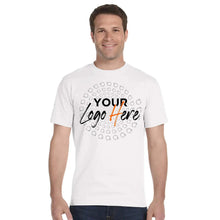
Order a single custom shirt or as many pieces as your business, team, event, or organization needs.
Save more as your quantity increases with volume pricing designed for larger custom apparel orders.
Need it fast? Eligible orders can be printed the same day when product, artwork, and production requirements qualify.
Keep your costs straightforward with no setup fees on qualifying custom printing orders.
Choose from screen printing, DTG, DTF, vinyl, and heat transfer to find the right option for your design.
Need help getting your design print-ready? Our team can review your artwork and assist before production begins.


Cost-effective, durable printing for larger quantities, bold designs, businesses, teams, and events.

Ideal for full-color artwork, fine details, gradients, and smaller custom apparel orders.

Vibrant, detailed transfers that work well across a wide variety of garments and fabric types.

A great choice for personalized apparel, team jerseys, names, numbers, and simple custom graphics.

Volume-focused printing solutions for brands, businesses, resellers, organizations, and large apparel orders.

Get your artwork reviewed, corrected, and optimized to help achieve a cleaner, higher-quality final print.

STEP 01
Browse T-shirts, hoodies, sweatshirts, long sleeves, and more to find the right garment, color, and fit for your project.
STEP 02
Upload your artwork, logo, or graphic, or use our online design tools to personalize your apparel.
STEP 03
Choose your sizes and quantities for an individual order, business, team, event, organization, or larger group event.
STEP 04
Confirm your design and order details. Once everything is ready, we'll move your apparel into production and fulfillment.

Custom T-shirt printing in Grafton, North Dakota makes it possible to build apparel around content that matters to a particular project. Custom One Online supports suitable photographs, logos, illustrations, names, numbers, lettering, and original graphics on customizable clothing. Customers can create individual shirts, organization apparel, creator merchandise, personalized garments, and qualifying larger orders using available printing options.
Custom apparel is often discussed in terms of what gets added to a shirt, but subtraction can be just as important. A design does not need every available photograph, phrase, logo variation, color, date, or piece of information. Selecting what deserves to appear on the garment can make the finished apparel more focused. Printing provides many possibilities; a successful project can use only the possibilities that actually contribute to the result.
A custom garment has limited space, and that limitation can be useful. It encourages the customer to decide which content is important enough to occupy the printed area. A photograph may work without additional decoration. An illustration may not need a paragraph of text. A business logo may already communicate what the employee apparel needs to represent.
Photo apparel demonstrates this clearly. Customers can explore a custom photo T-shirt for suitable portraits, family pictures, pet photographs, friendship images, memorial photos, and other selected photography. If the image already carries the intended significance, the design can allow the photograph to remain central.
Text can still be added where it contributes useful information. A name, date, year, or short phrase can provide context without competing unnecessarily with the photograph. Customers interested in applicable lettering can explore custom vinyl shirts.
Original illustration can benefit from similar restraint. A detailed graphic created by an artist may already contain its own composition and visual character. Customers with suitable artwork can consider direct-to-garment printing for applicable designs.
Direct-to-film printing provides another option for suitable graphics. The choice to customize a shirt does not require filling every printable area. Front, back, lettering, personalization, and other elements can be used only when the project calls for them.
This can be especially useful for one-piece projects. Customers can review custom T-shirts with no minimum for suitable individual requirements. A single garment can concentrate on one photograph, one illustration, or one concise message without needing additional elements simply to make the project seem larger.
For Grafton customers, the freedom of custom printing includes the freedom to keep an idea focused. The number of available customization options does not determine how many of them need to appear on a particular shirt.
A business, creator, or organization may have several logos, illustrations, phrases, or other visual assets available. That does not mean every garment should contain all of them. Different pieces of apparel can make selective use of the material that fits them.
A Grafton business might use a primary company mark on employee T-shirts without adding every secondary graphic associated with the business. Customers with suitable repeated designs can explore screen printing, while qualifying larger-volume requirements can use information available through screen printing wholesale.
A creator can take the same selective approach to merchandise. Customers can browse create-your-own apparel for suitable original illustrations, graphic compositions, and typography. One design can become a T-shirt without requiring the creator's entire catalog to become clothing at the same time.
Suitable merchandise can also be introduced in limited quantities through customizable T-shirts with no minimum. A creator can choose a particular graphic for apparel and leave other artwork in its original format until there is a reason to produce it.
The same selectivity can apply to garment products. A design may work well on a standard shirt but not need a sleeveless version. Another graphic might be appropriate for custom tank tops. A different project may call for custom long-sleeve T-shirts.
Custom hoodies with no minimum provide another suitable option without forcing every design to be offered on hoodies. Customers can decide which graphics belong on which products instead of treating the entire apparel catalog as one mandatory set.
This can make a project easier to understand. Each garment has a reason for containing the visual material placed on it. Products do not become crowded with graphics merely because those graphics were available, and merchandise does not expand into categories that the project does not require.
Custom apparel provides many possible combinations, but customers do not have to use all of them. A selective approach can keep the finished products connected to the original intent of each design.
Names and numbers can add valuable information to custom apparel, but they do not need to appear automatically on every group order. Their value is strongest when the project has a real reason to distinguish individual wearers.
Teams provide a familiar example. Customers can explore team T-shirts with numbers for suitable projects where participant numbers have a practical role. The primary team design can identify the group while the number distinguishes a particular garment.
Customers can also review custom names and numbers for applicable personalization. A name can be included when individual identification contributes to the finished apparel rather than being added simply because personalization is available.
Other group projects may need no visible individual information at all. A business might require only its company graphic and the correct employee sizes. A family project might use one shared design without names. Another organization might need a combination of standard pieces and a smaller number of personalized garments.
Customers preparing suitable larger requirements can explore custom bulk T-shirts. A higher total quantity does not create an automatic need for more decoration. The apparel can remain as simple or as personalized as the project requires.
Qualifying customers researching undecorated apparel for volume needs can also review blanks wholesale. Selecting appropriate garments can be handled independently from deciding how much printed information belongs on them.
Younger participants can be accommodated through custom kids' shirts when suitable. Adults and children can share a primary design while using apparel appropriate to their respective requirements.
This allows personalization to remain purposeful. A number can identify a participant, a name can identify a wearer, and a shared graphic can identify the larger group. Elements that do not contribute to the project can simply remain absent.
A technical issue with an artwork file does not always mean the customer wants a new design. Sometimes the desired graphic has already been selected and the remaining concern is whether the available file can support the intended apparel project.
Customers can explore design review and repair for applicable artwork concerns. Suitable older or problematic files can also be considered through the art repair and file recovery service.
This distinction can be important for established graphics. A company may want to keep the logo customers already recognize. A creator may want to use a particular illustration without replacing its visual character. A personal project may depend on one specific image rather than a newly invented alternative.
Technical preparation can therefore focus on the file issue without automatically adding creative material the customer never requested. The goal can remain the selected design on the selected apparel.
Customers can review custom apparel services when considering suitable production options. Available approaches include screen printing, DTG, DTF, vinyl, and related customization services for different applicable requirements.
Projects with near-term needs can also explore same-day printing T-shirts for qualifying orders. Applicable fulfillment information is available through the same-day shipping page.
A shorter schedule does not require unnecessary additions to the design. Customers can focus on the information needed to produce the intended apparel: suitable artwork, garment products, sizes, quantities, and any personalization that genuinely belongs in the project.
Customers with specialized or qualifying higher-volume requirements can use the request a quote page. Common questions about available customization and ordering can also be reviewed through the FAQ.
Custom One Online serves customers in Grafton, North Dakota with apparel printing options that provide substantial creative flexibility without requiring customers to use every available feature. A shirt can contain one photograph rather than several. Merchandise can feature one selected illustration rather than an entire catalog. Employee apparel can carry a company graphic without unnecessary additional decoration.
The same approach can apply to garment selection and personalization. A project can use T-shirts without adding hoodies, or include a few hoodies without expanding the entire order. Names and numbers can appear where they serve a clear function and remain absent where they do not.
Custom printing is valuable partly because it provides options, but options are not obligations. Grafton customers can use the printing methods, apparel products, quantities, and personalization features that contribute to the intended result while leaving everything else out of the project.