








Custom T-Shirt Printing in Lewiston, Maine – Screen Printing, DTF, DTG, and Personalized Apparel
Lewiston's story is written into systems that were built to keep things moving: the Androscoggin River, canals carrying water to mills, rail connections, textile production, neighborhood streets, and the relationship between Lewiston and Auburn on opposite sides of the river. Incorporated as a town in 1795 and later transformed by nineteenth-century industrialization, Lewiston grew from a dispersed agricultural community into one of Maine's major manufacturing centers. Irish workers helped construct its canals, textile mills employed thousands, and French-Canadian migration became especially important to the city's population and cultural life.
That history offers a useful way to organize custom apparel: give every design a backbone before adding its branches. A backbone is the smallest set of elements that makes the project unmistakably itself. For a company, that might be the approved business identity. For a reunion, it could be a surname and year. For a volunteer project, it might be an original event mark. For an artist, it may simply be the artwork. Once that backbone is established, secondary information can be added without forcing every available detail onto the garment.
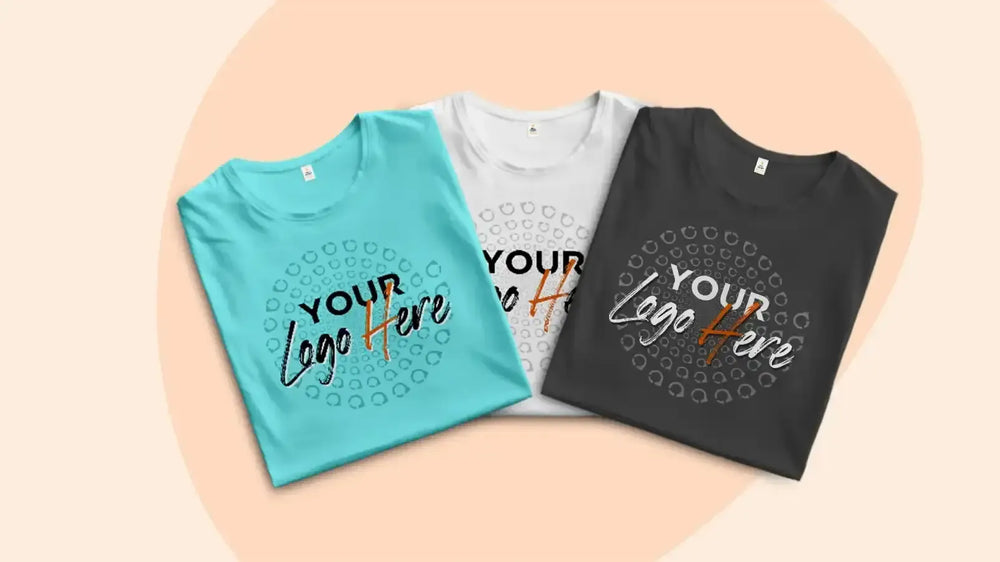
Custom One provides online custom t-shirt printing for customers and projects in Lewiston, Maine. Eligible orders can range from one custom T-shirt with no minimum to employee apparel, family shirts, recreational clothing, volunteer garments, creator merchandise, event apparel, and larger bulk custom T-shirt orders using original, licensed, or appropriately authorized artwork.
Find the Backbone before Filling the Shirt
A custom shirt has limited physical space, but that does not mean every inch needs to be occupied. Establishing the backbone first makes it easier to judge whether another element contributes something useful.
Suppose a Lewiston contractor needs employee apparel. The company name and approved logo may form the backbone. A department label could support it. A phone number might be useful on a promotional version. A long service list, several equipment illustrations, a Maine silhouette, an event date, and unrelated decorative material might not be necessary.
A family reunion would use a completely different backbone. A surname, verified year, and original family graphic could be sufficient. A historical organization might prioritize the subject and date. A recreational group may need its independent identity plus names and numbers.
Once those essential elements are clear, production decisions become easier because the project knows what must survive every adjustment in garment, size, placement, and personalization.
The Androscoggin River Became Lewiston's Industrial Backbone
Lewiston developed on the east side of the Androscoggin River at Twenty-Mile Falls. Early settlers recognized the potential of the falling water, and a timber dam was constructed by 1808–1809. In 1809, Michael Little established a building containing saw, grist, and fulling mills near the falls.
Much larger changes followed during the nineteenth century. Local entrepreneurs organized efforts to develop dams, canals, and mills, and outside investment eventually financed a much more ambitious industrial system. Water diverted through canals supplied power to textile operations and helped transform Lewiston from a relatively small farming town into an urban manufacturing center.
For original apparel, the river-and-canal relationship offers visual material that does not require copying a municipal graphic. Designers can develop independent water lines, canal geometry, mill-inspired forms, creator-owned river photography, textile patterns, or abstract compositions based on movement through the landscape.
Existing maps, professional photographs, historical illustrations, government graphics, and another artist's interpretation remain separate creative assets and should be evaluated before merchandise reproduction.
Lewiston's Human History Begins Long before Its Incorporation
The Androscoggin watershed has Indigenous histories extending far beyond Lewiston's eighteenth-century European-American settlement. Maine is part of the homeland of Wabanaki peoples, whose distinct communities include the Penobscot, Passamaquoddy, Mi'kmaq, and Wolastoqiyik or Maliseet, with Abenaki peoples also deeply connected to the wider region.
Rivers were not empty corridors awaiting industrial development. They supported travel, fishing, seasonal activity, trade, relationships among communities, and cultural life long before dams and textile canals changed waterways throughout Maine.
Projects interpreting this deeper history should avoid collapsing distinct Wabanaki peoples into generic “Maine Native” imagery. Tribal seals, community-specific symbols, Native languages, traditional designs, ceremonial imagery, cultural objects, archaeological materials, historical cultural resources, and works by identifiable Indigenous artists may require authorization and appropriate context.
Public display, museum documentation, historical publication, archival availability, or online visibility does not automatically establish cultural authorization or merchandise reproduction rights. Original non-cultural river landscapes, plants, architecture, industrial forms, and creator-owned photography provide alternatives when a project lacks an appropriate cultural relationship.
Build the Production Method around the Artwork
The project's backbone may be visually simple or highly detailed. Suitable production methods depend on the actual graphic, garment, quantity, personalization, and intended appearance.
Screen Printing
Suitable repeatable company identities, organization graphics, family designs, event artwork, and merchandise may be considered for screen printing, depending on artwork, quantity, garments, and production requirements.
Direct-to-Film Printing
Suitable detailed digital illustrations and multicolor graphics may be considered for DTF printing.
Direct-to-Garment Printing
Suitable authorized photographs and selected image-rich artwork may be candidates for DTG printing, depending on garment and image characteristics.
Heat Transfer and Vinyl
Suitable names, numbers, departments, employee roles, and selected lettering may use heat transfer or vinyl printing or another appropriate personalization method.
Quantity alone does not determine the printing process. Fabric composition, artwork detail, image characteristics, printable dimensions, placement, personalization, and garment construction can also influence production.
Lewistown Became Lewiston
In 1768, the Pejepscot Proprietors granted land on the east side of the Androscoggin at Twenty-Mile Falls to Jonathan Bagley and Moses Little, with expectations that families would be settled and transportation connections developed. The place became known as Lewistown.
Paul Hildreth and his family arrived in 1770 and are identified in the city's historical record as its first white settlers. Hildreth operated an early ferry across the river. By the first federal census in 1790, the settlement had 532 residents, and Lewiston received its town charter on February 18, 1795.
Historical apparel can work with documented dates, independently drawn ferry or river imagery, original period-influenced typography, or creator-owned landscape photography. The underlying historical facts can inspire new work without requiring direct reproduction of an archival map, historic photograph, newspaper page, or museum graphic.
The Canal and Mill System Changed Lewiston's Scale
Industrial development accelerated during the middle of the nineteenth century. Boston investors, including Benjamin E. Bates, helped finance canal construction and textile mills. Irish immigrants provided significant labor for canal construction, and the new industrial infrastructure reshaped the city's physical and economic landscape.
Large textile complexes eventually included names such as Bates, Continental, Androscoggin, and other mills. The factories drew workers from rural Maine and from immigrant communities while housing expanded near the industrial district.
Original mill-history apparel can focus on brick geometry, independently illustrated textile machinery, canal gates, worker occupations, fabric patterns, creator-owned architectural photography, or documented family employment histories.
Historic company marks, textile labels, advertisements, archival photographs, engineering drawings, museum graphics, and modern redevelopment branding should not automatically be assumed to be unrestricted merchandise assets.
French-Canadian Migration Became Fundamental to Lewiston's Identity
Lewiston's expanding textile industry attracted large numbers of French-speaking immigrants from Canada, particularly during the second half of the nineteenth century and into the twentieth. Many families settled near the mills, including in the neighborhood known as Little Canada.
Franco-American residents built institutions that supported community life through churches, schools, newspapers, businesses, social organizations, family networks, and French-language culture. Their influence became a major part of Lewiston's identity rather than a temporary chapter in its industrial history.
Apparel exploring Franco-American family history can be especially meaningful when it comes from specific family records, documented occupations, verified names, original illustrations, or authorized photographs. French-Canadian identity should not be reduced to a handful of stereotypes merely because the project is associated with Lewiston.
Church marks, newspaper mastheads, organizational logos, archival photographs, historical advertisements, and another family's private materials should be evaluated separately before reproduction.
Textile History Can Inspire the Structure of a Graphic
Lewiston's mills produced textiles on an enormous scale, making pattern, repetition, fibers, machinery, and fabric itself particularly appropriate subjects for independent design.
An illustrator could develop a geometric pattern influenced by loom structure. A family whose relatives worked in a mill could build a commemorative design around documented occupations. A photographer might create a collection from creator-owned architectural images. A designer could use abstract canal lines and textile grids rather than a literal mill illustration.
This allows the city's industrial history to influence the visual language of a shirt without requiring reproduction of an existing mill logo or historical photograph.
Bates College Adds Another Long-Running Institution to Lewiston's Story
The institution that became Bates College opened in Lewiston in 1855 as the Maine State Seminary. Bates identifies itself as New England's first coeducational college, and the school evolved into a four-year college during the 1860s. It took the Bates name in honor of industrialist and benefactor Benjamin E. Bates.
The college remains an important educational institution in Lewiston and contributes to academic, cultural, athletic, and community life.
Students, families, alumni, employees, community partners, and visitors should remember that a connection with a college does not automatically grant merchandise rights to its name, logos, mascot, athletics marks, seals, or other protected branding. Independent projects should use original identities unless appropriate institutional authorization exists.
Modern Lewiston Continues to Add New Chapters
Lewiston's identity did not stop evolving when textile manufacturing declined. The city has transitioned toward a more diversified economy, while its population and cultural life continue to change.
In recent decades, Somali and other African immigrant and refugee communities have become important parts of Lewiston's contemporary social, business, educational, religious, and cultural landscape. Modern Lewiston therefore includes histories and experiences that cannot be represented accurately by mill imagery alone.
Community-specific apparel should come from the people and organizations being represented. Languages, religious material, national or ethnic symbols, cultural designs, personal photographs, and organization identities should be used with appropriate knowledge and permission rather than treated as decorative shortcuts.
Business Apparel Needs a Backbone That Survives Routine Use
Today's Lewiston economy includes healthcare, education, manufacturing, construction, professional services, restaurants, retail, logistics, financial services, nonprofits, home services, and other sectors.
A legitimate employer can begin with its current approved identity and build outward only where necessary. Suitable repeatable company artwork may be considered for custom screen printing, while larger eligible programs can explore wholesale screen printing.
Employee roles or departments can be added without redesigning the core identity. An event version might introduce temporary wording while the primary company graphic remains consistent.
Standard decorated apparel should not automatically be considered high-visibility clothing, flame-resistant workwear, electrical PPE, chemical-resistant garments, medical PPE, or another specialized occupational product. Employers with technical requirements should verify the specifications of the underlying garments.
Family Projects Already Have Their Most Important Source Material
Lewiston families may create apparel for reunions, weddings, anniversaries, birthdays, graduations, memorials, retirement celebrations, vacations, religious gatherings, and multigenerational events.
A surname, family branch, verified date, meaningful phrase, original emblem, documented occupation, or authorized photograph can create a strong backbone without borrowing an unrelated city, college, sports, or entertainment identity.
Suitable photographic projects can explore a custom photo T-shirt. Families ordering across generations can also browse custom kids' shirts, custom V-neck T-shirts, and custom hoodies with no minimum.
Professional wedding photography, school portraits, studio images, graduation photography, newspaper photographs, and other third-party images should only be reproduced with appropriate permission.
Personalization Can Sit on Top of a Stable Group Identity
Lewiston residents participate in baseball, softball, football, basketball, soccer, hockey, running, cycling, swimming, fitness activities, youth athletics, and other recreation. An independent recreational group can establish one common design and then add legitimate participant information.
Suitable projects can explore team T-shirts with numbers and custom names and numbers.
A structured roster can include participant name, exact printed name, number, garment, size, and quantity. This keeps individualized data separate from the shared graphic.
Professional, collegiate, school, league, tournament, race, facility, and event marks may require authorization. Participation, enrollment, attendance, employment, or fandom does not automatically provide merchandise rights to another organization's branding.
Community Shirts Can Keep the Mission Visible
Lewiston churches, charities, immigrant-led organizations, food programs, arts groups, neighborhood initiatives, youth organizations, health programs, environmental projects, and other community groups may use apparel for volunteers, fundraising, outreach, or events.
The strongest backbone may simply be the legitimate organization's own identity and the purpose of the project. Sponsor marks and partner identities can be added when approved, but they do not need to overwhelm the organization doing the work.
Groups planning specialized quantities, mixed garments, or other production requirements can request a custom apparel quote.
Working with the City of Lewiston, State of Maine, a Tribal nation, school, college, healthcare provider, museum, government agency, nonprofit, emergency service, or business does not automatically authorize reproduction of that organization's seals, badges, logos, cultural material, uniforms, or protected marks.
Lewiston Gives Creators More Source Material than a Generic Maine Theme
Photographers, illustrators, musicians, filmmakers, designers, writers, performers, and makers can work from Lewiston's actual environment: the Androscoggin, canal infrastructure, brick mills, textile patterns, downtown architecture, neighborhood streets, bridges, changing weather, contemporary businesses, parks, industrial details, and everyday community life.
A photographer can use creator-owned mill imagery. An illustrator can build an independent textile-inspired pattern. A designer can transform canal geometry into abstract artwork. A musician can commission merchandise artwork with reproduction rights addressed from the beginning.
Creators testing suitable designs can explore create-your-own apparel or customizable T-shirts with no minimum.
Murals, sculptures, song lyrics, professional photographs, Wabanaki cultural material, museum graphics, government identities, college marks, company logos, and works by other identifiable creators can still have rights holders or cultural restrictions even when publicly visible.
Keep the Backbone Obvious inside the Project Files
A complex Lewiston project might contain original artwork, company logos, family photographs, mill research, Wabanaki historical references, participant names, sponsor identities, garment specifications, and several design versions.
Useful file labels can include CORE-ART, ORIGINAL-ART, APPROVED-LOGO, AUTHORIZED-PHOTO, CURRENT-ROSTER, MILL-HISTORY-REFERENCE, CULTURAL-REFERENCE, GOVERNMENT-REFERENCE, SPONSOR-APPROVED, REFERENCE-ONLY, AUTHORIZATION-PENDING, FINAL-ART, and FINAL-PRODUCTION.
Eligible projects can explore design review and repair. Selected graphics may also benefit from an art repair and file recovery service.
Technical cleanup, tracing, rebuilding, cropping, redrawing, vectorization, background removal, or file conversion does not create copyright, trademark, publicity, cultural, Tribal, government, corporate, museum, college, school, sports, or other reproduction rights.
Keep the Backbone while the Garment Changes
A Lewiston order may include standard tees, youth products, V-necks, tanks, long sleeves, and hoodies. The core design can remain recognizable even when its dimensions and placement need adjustment.
Customers can browse custom T-shirt printing, custom tank tops, custom long-sleeve shirts, custom kids' shirts, custom V-neck T-shirts, and custom hoodies with no minimum.
Necklines, seams, pockets, hoods, fabric compositions, and printable dimensions differ. A layout can be adapted to each product instead of forcing one set of dimensions onto every garment.
The Project Is Not Complete until the Apparel Reaches Its Destination
Employee programs, reunions, recreational events, volunteer projects, graduations, business promotions, performances, fundraisers, and merchandise releases can have fixed dates. Production speed should therefore be considered alongside carrier transit.
Qualifying projects can explore same-day shipping custom apparel. Same-day shipping means an eligible order is dispatched within the applicable timeframe. It does not mean guaranteed same-day delivery to Lewiston, Maine.
Artwork readiness, personalization, cutoff times, garment availability, order complexity, production eligibility, destination, carrier schedules, Maine weather, and transit conditions can affect arrival. Customers working toward a fixed date should review same-day shipping information and allow appropriate carrier transit time after dispatch.
Give Lewiston Custom Apparel a Backbone Strong Enough to Carry the Whole Project
Lewiston's physical history demonstrates what a strong underlying system can support. The Androscoggin supplied water power. Canals carried that power into an expanding mill district. Textile manufacturing supported enormous economic growth and attracted workers from rural Maine, Ireland, French Canada, and elsewhere. Bates College developed alongside the growing industrial city, while later economic transitions and newer immigrant communities continued changing what Lewiston meant.
Custom apparel does not need to contain every part of that history—or every available piece of information about a present-day organization—to feel complete. It needs a clear backbone. An employer can center its approved identity. A family can center its own name and story. A recreational group can center original team artwork. A volunteer project can center its mission. A creator can let original artwork do most of the work.
Custom t-shirt printing in Lewiston, Maine can support manufacturers, healthcare organizations, educational groups, contractors, restaurants, retailers, professional services, families, schools, churches, nonprofits, volunteers, recreational groups, photographers, artists, musicians, makers, historical projects, cultural organizations, and independent brands. Eligible projects can range from one personalized garment to bulk apparel involving multiple products, sizes, names, numbers, departments, sponsors, and participant roles.
Custom One provides online options for screen printing, DTG, DTF, heat transfer vinyl, photo shirts, custom names and numbers, no-minimum apparel, and bulk printing. Original or appropriately authorized artwork, accurate Lewiston history, respectful treatment of Wabanaki peoples and culturally specific Indigenous material, thoughtful handling of Franco-American and newer immigrant community histories, responsible use of government, college, museum, corporate, sports, historical, and third-party assets, organized production files, garment-aware layouts, and realistic shipping expectations can help create Lewiston apparel whose essential identity remains clear no matter how many supporting details are added around it.