
Sign In
and get 10% off your first order!

✅ No Minimum
✅ No Setup Fee
✅ Free Art Review and Repair
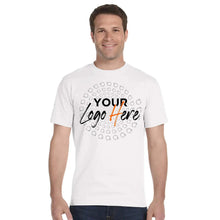
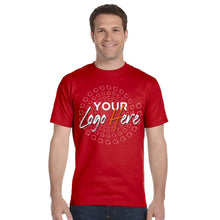
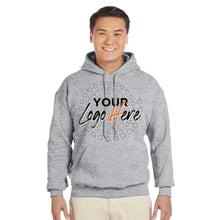
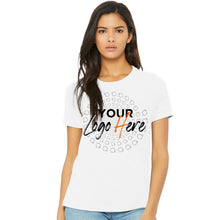
Order a single custom shirt or as many pieces as your business, team, event, or organization needs.
Save more as your quantity increases with volume pricing designed for larger custom apparel orders.
Need it fast? Eligible orders can be printed the same day when product, artwork, and production requirements qualify.
Keep your costs straightforward with no setup fees on qualifying custom printing orders.
Choose from screen printing, DTG, DTF, vinyl, and heat transfer to find the right option for your design.
Need help getting your design print-ready? Our team can review your artwork and assist before production begins.


Cost-effective, durable printing for larger quantities, bold designs, businesses, teams, and events.

Ideal for full-color artwork, fine details, gradients, and smaller custom apparel orders.

Vibrant, detailed transfers that work well across a wide variety of garments and fabric types.

A great choice for personalized apparel, team jerseys, names, numbers, and simple custom graphics.

Volume-focused printing solutions for brands, businesses, resellers, organizations, and large apparel orders.

Get your artwork reviewed, corrected, and optimized to help achieve a cleaner, higher-quality final print.

STEP 01
Browse T-shirts, hoodies, sweatshirts, long sleeves, and more to find the right garment, color, and fit for your project.
STEP 02
Upload your artwork, logo, or graphic, or use our online design tools to personalize your apparel.
STEP 03
Choose your sizes and quantities for an individual order, business, team, event, organization, or larger group event.
STEP 04
Confirm your design and order details. Once everything is ready, we'll move your apparel into production and fulfillment.

Custom T-shirt printing in Beaverton, Oregon gives customers control over a part of clothing that standard sizing charts cannot describe: what the garment is actually about. Custom One Online supports suitable photographs, illustrations, logos, lettering, names, numbers, and original graphics across customizable apparel. Customers can create individual pieces, creator merchandise, business clothing, team apparel, personalized garments, and qualifying higher-volume orders.
Clothing is usually described through measurable characteristics such as size, garment type, and quantity. Customization introduces another dimension that cannot be summarized by those measurements alone. Two shirts can have the same size and basic product specifications yet be completely different finished items because one carries a photograph and the other carries original artwork. The printed subject becomes an additional defining characteristic of the product.
Standard apparel information is useful because customers need to know what kind of garment they are ordering. Yet ordinary product information cannot explain the visual subject that makes a customized piece different from another garment of the same type.
Consider two otherwise similar shirts. One might contain a family photograph, while the other contains a drawing supplied by an artist. Their basic apparel descriptions could be nearly identical, but nobody encountering the finished products would consider them interchangeable.
Customers can explore a custom photo T-shirt for suitable portraits, family photographs, pet pictures, friendship images, memorial photos, and other selected photography. The image introduces information that no conventional garment size or product label could communicate.
Original artwork can distinguish a shirt just as strongly. Customers can explore create-your-own apparel for suitable illustrations, typography, and graphics. Depending on the project, detailed artwork can be considered through direct-to-garment printing.
Applicable designs can also be explored through direct-to-film printing. These services give customers options for turning selected graphics into apparel rather than defining the product only through the blank garment.
Words introduce another characteristic that standard apparel specifications cannot capture. Suitable lettering and graphics can be considered through heat transfer and vinyl printing. A surname, phrase, date, or requested wording can make the finished piece specific even when the underlying shirt is otherwise familiar.
Customers who require only one or a limited number of garments can explore custom T-shirts with no minimum. The distinctiveness of the finished product does not depend on how many copies are ordered.
For Beaverton customers, this means the most important description of a custom shirt may not be found on its conventional garment label. The label can identify the size and product, while the customization explains what makes that particular piece different.
A T-shirt category can include personal apparel, artwork merchandise, organization clothing, and many other customized products. They share a clothing format without necessarily sharing a subject or purpose.
This becomes even more apparent when customers consider several apparel categories. A suitable design can be considered for V-neck T-shirts when that neckline fits the requested product. Custom tank tops provide another option for applicable sleeveless apparel.
Customers looking for additional coverage can explore custom long-sleeve T-shirts. Suitable heavier apparel can be considered through custom hoodies with no minimum.
These products can all be customized, but customization prevents the category name from telling the entire story. “Custom hoodie” does not reveal whether the finished piece contains an illustration, company logo, photograph, or another graphic. “Custom tank top” describes the apparel category but not the particular content selected by the customer.
Projects intended for younger wearers can consider custom kids' shirts. Customers interested in another customizable clothing category can also review design-your-own pants.
Creators can take advantage of this distinction when developing merchandise. They can use familiar apparel categories while allowing original graphics to differentiate the actual products being offered. A shirt carrying one illustration becomes a different merchandise item from an otherwise similar shirt carrying another.
Suitable smaller merchandise projects can be considered through customizable T-shirts with no minimum. This gives creators a way to develop apparel around original work without making a substantial initial quantity part of the definition of the product.
For Beaverton creators and customers, apparel categories provide useful organization without restricting what the finished products can contain. The category identifies the clothing; the customization defines the particular item within that category.
Personalized organization apparel demonstrates the limits of conventional product descriptions particularly well. Several team shirts can use the same basic garment, size range, and broader graphic while still becoming different finished pieces because of names or numbers.
Customers can explore team T-shirts with numbers for suitable numbered apparel. Applicable participant-level information can also be considered through custom names and numbers.
A shirt carrying number 8 is not the same assigned piece as a similar shirt carrying number 14 when those numbers correspond to different participants. The underlying apparel description may differ very little, yet the customization gives each garment a distinct identity within the project.
Businesses can create another type of distinction. A Beaverton company can place suitable organization graphics on employee apparel. Customers with repeated artwork appropriate for the process can explore screen printing.
Qualifying higher-volume requirements can also be considered through screen printing wholesale. A company graphic turns the selected clothing into apparel associated with that organization rather than leaving the garment visually generic.
Customers preparing suitable larger requirements can explore custom bulk T-shirts. A larger quantity does not eliminate the possibility of meaningful differences among pieces. Sizes may vary, and applicable personalization can distinguish individual garments where the project requires it.
Qualifying customers researching undecorated apparel can also review blanks wholesale. Blank apparel provides the conventional garment characteristics before requested decoration introduces the visual information specific to the project.
This is why a customized order cannot always be understood merely by saying that it contains a certain number of shirts. The printed content can determine whether those shirts are interchangeable, organization-specific, or assigned to particular people.
For teams and organizations serving Beaverton, customization adds information that ordinary apparel inventory data alone cannot express. The finished pieces are defined by both what they are as garments and what has been printed on them.
Producing custom clothing requires ordinary apparel information, but it also requires information unique to customization. Garment products, sizes, and quantities describe the clothing portion of the order. Artwork and applicable personalization describe what turns those garments into the requested finished products.
Customers can review custom apparel services when considering available production approaches. Depending on applicable requirements, options can include screen printing, DTG, DTF, vinyl, and related customization services.
Artwork can occasionally need technical attention before an applicable project proceeds. Customers with suitable file concerns can explore design review and repair.
Older or problematic graphics can also be considered through the art repair and file recovery service. This can help when the desired artwork is known but the available file requires technical assistance for the intended customization.
The finished garment ultimately combines both sets of information. It has a physical product, a size, and other apparel characteristics, but it also has the requested graphic and any applicable individualized details. Neither side alone fully describes what the customer ordered.
Some projects may have shorter turnaround requirements. Customers with qualifying needs can explore same-day printing T-shirts. Applicable fulfillment information can be reviewed through same-day shipping.
Customers preparing specialized or qualifying higher-volume requirements can use the request a quote page. Common information about customization and ordering can also be reviewed through the FAQ.
Custom One Online serves customers in Beaverton, Oregon with apparel printing options that add customer-selected visual information to familiar clothing products. The resulting garment cannot be described completely by size, style, or quantity because its printed content is part of what makes it the requested item.
A medium T-shirt containing a family photograph is different from a medium T-shirt carrying an original illustration. A company shirt is different from an undecorated version of the same garment. Two team shirts can differ because one carries a participant name or number that the other does not.
For Beaverton customers, custom T-shirt printing expands the definition of an apparel product. The garment specifications explain what the customer will wear, while the customization explains which particular piece it is and why it was worth ordering in the first place.