
Sign In
and get 10% off your first order!

✅ No Minimum
✅ No Setup Fee
✅ Free Art Review and Repair
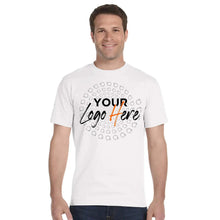
Order a single custom shirt or as many pieces as your business, team, event, or organization needs.
Save more as your quantity increases with volume pricing designed for larger custom apparel orders.
Need it fast? Eligible orders can be printed the same day when product, artwork, and production requirements qualify.
Keep your costs straightforward with no setup fees on qualifying custom printing orders.
Choose from screen printing, DTG, DTF, vinyl, and heat transfer to find the right option for your design.
Need help getting your design print-ready? Our team can review your artwork and assist before production begins.


Cost-effective, durable printing for larger quantities, bold designs, businesses, teams, and events.

Ideal for full-color artwork, fine details, gradients, and smaller custom apparel orders.

Vibrant, detailed transfers that work well across a wide variety of garments and fabric types.

A great choice for personalized apparel, team jerseys, names, numbers, and simple custom graphics.

Volume-focused printing solutions for brands, businesses, resellers, organizations, and large apparel orders.

Get your artwork reviewed, corrected, and optimized to help achieve a cleaner, higher-quality final print.

STEP 01
Browse T-shirts, hoodies, sweatshirts, long sleeves, and more to find the right garment, color, and fit for your project.
STEP 02
Upload your artwork, logo, or graphic, or use our online design tools to personalize your apparel.
STEP 03
Choose your sizes and quantities for an individual order, business, team, event, organization, or larger group event.
STEP 04
Confirm your design and order details. Once everything is ready, we'll move your apparel into production and fulfillment.

Custom T-shirt printing in Hamilton, Ohio gives customers access to apparel that can be commissioned around a specific visual request rather than limited to graphics already available on finished clothing. Custom One Online supports suitable photographs, illustrations, logos, lettering, names, numbers, and original designs across customizable apparel. Projects can include individual shirts, creator merchandise, workplace clothing, team apparel, personalized pieces, and qualifying higher-volume orders.
A useful characteristic of custom apparel is that the printed content can come from a completely different field than clothing. A photographer thinks about images. An illustrator thinks about artwork. A business thinks about its organization. A team thinks about participants. None of those activities begins with a T-shirt, yet each can eventually produce information suitable for apparel. Printing provides a common manufacturing destination for material created for very different reasons.
A photograph is already a finished visual object before anyone decides to place it on clothing. It may have been taken to capture a person, pet, relationship, celebration, or another subject. The photographer did not necessarily create the image as a shirt graphic. Custom printing can introduce that second use later.
Customers can explore a custom photo T-shirt for suitable portraits, family photographs, pet images, friendship pictures, memorial photos, and other selected photography. The subject of the image remains central even though its presentation changes from a screen or conventional print to apparel.
Illustration reaches clothing differently. An artist may begin with lines, shapes, characters, typography, or another visual concept. Customers with suitable detailed artwork can consider direct-to-garment printing. Applicable graphics can also be explored through direct-to-film printing.
Lettering introduces content whose importance often comes from the exact words rather than from an image. A surname, short phrase, date, or other suitable text can be considered through heat transfer and vinyl printing.
These materials do not have to become identical simply because they all reach apparel. Photography can retain photographic detail. Illustration can retain the qualities of the original artwork. Lettering can remain focused on words. Printing provides the common destination without erasing the differences among the source materials.
Customers who need only an individual or limited quantity can explore custom T-shirts with no minimum. The number of garments can reflect the actual requirement rather than the type of visual content being printed.
For Hamilton customers, this opens custom apparel to ideas that were not originally conceived as apparel products. The starting point can be an image, drawing, or piece of text that already has a reason to exist before clothing enters the project.
Creative work can appear in many forms. An illustrator might publish artwork digitally, create prints, use designs in promotional material, or develop merchandise. Custom clothing can become one of those destinations without requiring apparel to replace the creator's other formats.
Artists and designers can explore create-your-own apparel for suitable original graphics, illustrations, and typography. A design that works as independent artwork can also be considered for a wearable product where appropriate.
The creator then has access to choices that belong specifically to apparel. Customers can explore V-neck T-shirts for an alternative neckline and custom tank tops for suitable sleeveless merchandise.
Custom long-sleeve T-shirts provide another format, while custom hoodies with no minimum can be considered for suitable heavier apparel.
The existence of several garment choices does not mean every design needs to appear on every product. A creator can decide that one illustration belongs on a T-shirt while another is appropriate for a hoodie. The apparel offering can follow the work instead of forcing the work into an identical merchandise formula.
Creators interested in smaller apparel requirements can explore customizable T-shirts with no minimum. This can make apparel available as a creative product even when the project does not call for a substantial initial quantity.
Projects involving younger wearers can also consider custom kids' shirts. Customers interested in another clothing category can review design-your-own pants.
Apparel therefore becomes an additional outlet rather than a limitation on the original artwork. Hamilton creators can retain the character of their creative work while considering which pieces make sense as physical clothing products.
A company logo exists because a business needs an identity, not because someone initially needed a shirt. Team names, participant numbers, and other group information also originate from organizational activity. Custom printing allows that information to enter clothing after its original purpose has already been established.
A Hamilton business can place suitable company graphics on employee apparel. Customers with repeated artwork appropriate for the process can explore screen printing. Qualifying higher-volume projects can also consider screen printing wholesale.
The business does not need to invent a new identity simply because its graphic is moving onto apparel. The existing company material can remain the subject while the clothing order introduces garment products, sizes, and quantities.
Teams contribute another type of information. Customers can explore team T-shirts with numbers for suitable numbered apparel. Applicable participant-level customization can also be considered through custom names and numbers.
A number exists because it is associated with a participant. A name exists because it identifies someone. Those facts originate outside the printing process. Apparel production gives them a defined physical location on suitable garments.
Customers preparing larger requirements can explore custom bulk T-shirts. Qualifying customers interested in undecorated apparel can also review blanks wholesale.
This distinction helps explain why organization orders can contain both repeated and changing information. The company or team supplies the organizational facts, while the apparel order determines how those facts are represented across the required garments.
Custom clothing does not create the organization, its logo, its participants, or their names. Instead, it provides another place where those already-existing elements can be represented.
A photograph, illustration, company logo, and participant number have little in common when considered in their original environments. Once each is intended for apparel, however, all of them encounter a shared manufacturing question: how will the requested content become part of the selected garment?
Customers can review custom apparel services when considering applicable production approaches. Depending on project requirements, options can include screen printing, DTG, DTF, vinyl, and related customization services.
Artwork files sometimes require attention before this manufacturing step. Customers with applicable graphic concerns can explore design review and repair.
Suitable older or problematic graphics can also be considered through the art repair and file recovery service. This can be useful when the intended content is already known but the available file creates an obstacle to the applicable project.
Production also introduces requirements that the original visual material may never have needed. A photograph stored on a phone does not have a shirt size. A logo file does not have an apparel quantity. A participant number does not choose its own garment. Those details become necessary only because the material is being turned into clothing.
Some projects may also require a shorter production window. Customers with qualifying requirements can explore same-day printing T-shirts. Applicable fulfillment information can be reviewed through same-day shipping.
Customers preparing specialized or qualifying higher-volume projects can use the request a quote page. Common information about ordering and customization can also be reviewed through the FAQ.
Custom One Online serves customers in Hamilton, Ohio with apparel printing options capable of accepting visual material from many different parts of personal, creative, and organizational life. The source may be photography, illustration, typography, branding, or participant information, but the production destination can be customized clothing.
That shared destination does not require all projects to look alike. A personal photograph and a company logo remain fundamentally different pieces of content even if both ultimately appear on T-shirts. A creator illustration and a team number can use apparel for completely different reasons.
For Hamilton customers, custom T-shirt printing can therefore function as a manufacturing bridge between visual material and clothing. It gives content created for many different purposes a route into apparel while allowing each project to retain the reason that content mattered before anyone decided to print it.