
Sign In
and get 10% off your first order!

✅ No Minimum
✅ No Setup Fee
✅ Free Art Review and Repair
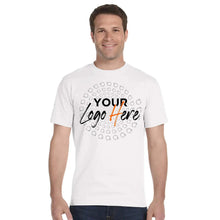
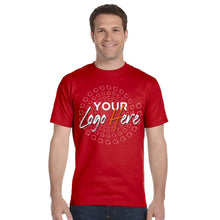
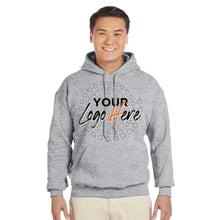
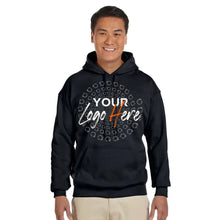
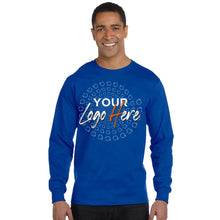
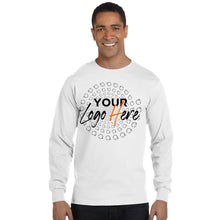
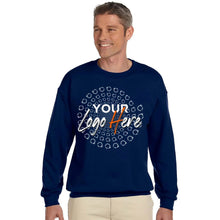
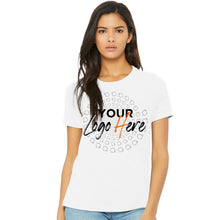
Order a single custom shirt or as many pieces as your business, team, event, or organization needs.
Save more as your quantity increases with volume pricing designed for larger custom apparel orders.
Need it fast? Eligible orders can be printed the same day when product, artwork, and production requirements qualify.
Keep your costs straightforward with no setup fees on qualifying custom printing orders.
Choose from screen printing, DTG, DTF, vinyl, and heat transfer to find the right option for your design.
Need help getting your design print-ready? Our team can review your artwork and assist before production begins.


Cost-effective, durable printing for larger quantities, bold designs, businesses, teams, and events.

Ideal for full-color artwork, fine details, gradients, and smaller custom apparel orders.

Vibrant, detailed transfers that work well across a wide variety of garments and fabric types.

A great choice for personalized apparel, team jerseys, names, numbers, and simple custom graphics.

Volume-focused printing solutions for brands, businesses, resellers, organizations, and large apparel orders.

Get your artwork reviewed, corrected, and optimized to help achieve a cleaner, higher-quality final print.

STEP 01
Browse T-shirts, hoodies, sweatshirts, long sleeves, and more to find the right garment, color, and fit for your project.
STEP 02
Upload your artwork, logo, or graphic, or use our online design tools to personalize your apparel.
STEP 03
Choose your sizes and quantities for an individual order, business, team, event, organization, or larger group event.
STEP 04
Confirm your design and order details. Once everything is ready, we'll move your apparel into production and fulfillment.

Custom T-shirt printing in Jenks, Oklahoma gives customers the ability to commission apparel instead of simply selecting it. Custom One Online supports suitable photographs, logos, illustrations, lettering, names, numbers, and original graphics on customizable clothing. The finished piece can be intended for one person, a creative project, an organization, a team, or a qualifying larger order.
Commissioned apparel has a useful characteristic: it can respond to a request that did not exist until a customer made it. The printer does not have to predict every possible shirt in advance. Customers supply the reason for creating the product, and available apparel and printing services provide the means to produce it. This makes custom printing especially useful for requests whose exact combination would be impossible to keep permanently stocked as finished merchandise.
Imagine trying to maintain a retail catalog containing every possible photograph someone might want on a shirt. It would be impossible. The same problem appears with original illustrations, family names, participant numbers, organization graphics, private jokes, personally meaningful dates, and countless other pieces of customer-specific content.
Custom printing avoids that problem by producing the requested combination after the customer defines it. A suitable photograph, for example, can be considered through a custom photo T-shirt. The image might be a portrait, family picture, pet photograph, friendship image, memorial photo, or another selected photograph supplied for the project.
The important point is that nobody needed to anticipate that exact image as a finished retail shirt. Its relevance comes from the customer's request.
Original creative work operates in much the same way. Customers can explore create-your-own apparel for suitable illustrations, typography, and original graphics. A drawing can become the subject of apparel because its creator wants that particular drawing produced, not because it was already part of a standard printed-shirt assortment.
Suitable detailed graphics can be considered through direct-to-garment printing. Applicable artwork can also be explored through direct-to-film printing.
Words create almost unlimited possibilities as well. Names, dates, short statements, and other requested text can make two otherwise similar garments entirely different products. Customers can review heat transfer and vinyl printing for suitable lettering and graphics.
The request does not have to justify a large quantity before it can be considered custom apparel. Customers seeking suitable individual or limited-quantity production can explore custom T-shirts with no minimum.
For Jenks customers, this creates an enormous field of possible apparel without requiring an enormous warehouse of preprinted designs. The finished product can be produced because somebody requested it, even when the exact combination of image, wording, garment, and quantity would never make sense as a permanent retail SKU.
The underlying apparel does not need to be unusual for the finished request to be highly particular. A familiar T-shirt can become something that belongs to one customer once it receives the customer's photograph, illustration, organization graphic, or personalized information.
This creates an interesting relationship between standardized apparel and nonstandard finished products. The clothing can come from recognizable product categories while the decoration makes the final combination specific.
Customers who prefer a different neckline can explore V-neck T-shirts. Suitable sleeveless apparel can be considered through custom tank tops.
For additional coverage, customers can review custom long-sleeve T-shirts. Suitable heavier apparel can be explored through custom hoodies with no minimum.
Projects involving younger wearers can consider custom kids' shirts. Customers interested in another customizable clothing category can also explore design-your-own pants.
These are understandable apparel categories. The unpredictability comes from what customers decide to do with them. One hoodie might carry an original illustration. One long-sleeve shirt might contain a photograph. A youth shirt could be part of a family project. Another garment might carry a business graphic or participant information.
Creators can take advantage of the same relationship. They do not necessarily need to manufacture a completely new type of clothing to make distinctive merchandise. Suitable original artwork can provide the unique component while established apparel products provide the physical format.
Creators considering smaller releases can explore customizable T-shirts with no minimum. The resulting merchandise can be specific to the creator even though the underlying clothing category is familiar.
This is part of what makes customized apparel practical. Uniqueness does not have to come from reinventing every component. A project can use familiar garments and familiar production methods while producing a finished combination that exists because one customer specifically requested it.
Businesses and teams demonstrate why made-to-request apparel is useful at another level. Even organizations that use straightforward graphics can generate combinations of sizes, quantities, names, and numbers that would be difficult to predict before an order exists.
A Jenks business may want its company graphic printed on employee apparel. Customers with suitable repeated artwork can explore screen printing. Qualifying higher-volume requirements can also be considered through screen printing wholesale.
The company graphic may already exist, but the precise apparel order still has to be defined. The business determines how many pieces it needs and which sizes are required. If different apparel products are involved, those choices further distinguish the order.
Teams create even more combinations because participant-level information can change. Customers can explore team T-shirts with numbers for suitable numbered projects.
Applicable individual customization can also be considered through custom names and numbers. A roster containing multiple names or numbers can create a collection of related garments in which individual pieces are not interchangeable.
It would make little sense to preprint every possible organization logo in every possible size with every possible participant number. Custom production allows those combinations to be assembled after the actual requirements are known.
Customers preparing suitable larger requirements can explore custom bulk T-shirts. Qualifying customers researching undecorated apparel can also review blanks wholesale.
This makes quantity responsive rather than speculative. A business can order around its applicable requirement instead of selecting from a preprinted quantity that somebody else predicted. A team can define its participant information according to the people actually included in the project.
The organization supplies facts that could not have been known by a generic clothing seller in advance. Custom production turns those facts into an apparel order after they become available.
Custom apparel reverses a familiar retail sequence. In ordinary shopping, the finished product already exists and the customer decides whether to buy it. With custom printing, the production capability can exist before the customer's exact finished garment has ever been made.
Customers can review custom apparel services when considering available production approaches. Depending on applicable project requirements, options can include screen printing, DTG, DTF, vinyl, and related customization services.
The service provides a production route, but the customer provides much of what makes the final result specific. The selected artwork, garment, size information, quantity, and applicable personalization determine the requested product.
Sometimes the concept is clear while the artwork file needs attention. Customers with applicable graphic concerns can explore design review and repair. Suitable older or problematic graphics can also be considered through the art repair and file recovery service.
That distinction is important. A file problem does not necessarily mean the customer needs a different concept. The requested finished shirt can already be understood even when technical work is needed on the supplied graphic.
Some made-to-request apparel may also have a shorter turnaround requirement. Customers with qualifying projects can explore same-day printing T-shirts. Applicable fulfillment information can be reviewed through same-day shipping.
Customers preparing specialized or qualifying higher-volume requirements can use the request a quote page. Common information about customization and ordering can also be reviewed through the FAQ.
Custom One Online serves customers in Jenks, Oklahoma by providing apparel customization services capable of responding after a specific request exists. A customer does not have to search indefinitely for a preprinted shirt containing the right photograph, exact original illustration, company graphic, name, or number.
Instead, the customer can define the relevant combination and use suitable customization options to create it. Familiar apparel products and established printing processes can support finished garments that could not reasonably have been predicted before the order was described.
For Jenks customers, that is one of the central advantages of custom T-shirt printing: the exact product does not need to exist before someone wants it. The request can come first, and the apparel can be produced around the particular content and requirements that make that request different from everything already sitting on a retail shelf.