








Custom T-Shirt Printing in Paducah, Kentucky – Screen Printing, DTF, DTG, and Personalized Apparel
Paducah occupies one of Kentucky's most consequential river locations, near the meeting of the Tennessee and Ohio Rivers in McCracken County. Its position helped turn the community into a center for steamboats, railroads, river industries, transportation, trade, manufacturing, and later a nationally recognized arts community. Paducah was incorporated in 1830, became the McCracken County seat in 1832, and was chartered as a city in 1856. The city's modern identity combines working-river traditions with quilting, visual arts, historic neighborhoods, cultural institutions, and a downtown protected by a floodwall constructed after the devastating Ohio River flood of 1937.
For custom apparel, Paducah suggests a distinctive planning principle: decide what the design is meant to withstand. A work shirt may need to remain useful through repeated wear. An event shirt needs to survive changes in sponsors and participants until the final roster is approved. A historical design should remain accurate when someone looks closely at its claims. A creator's merchandise should still feel intentional after the initial launch. A family shirt may need to make sense years after the gathering has ended. Thinking about what a design must withstand can reveal weaknesses before they become printed mistakes.
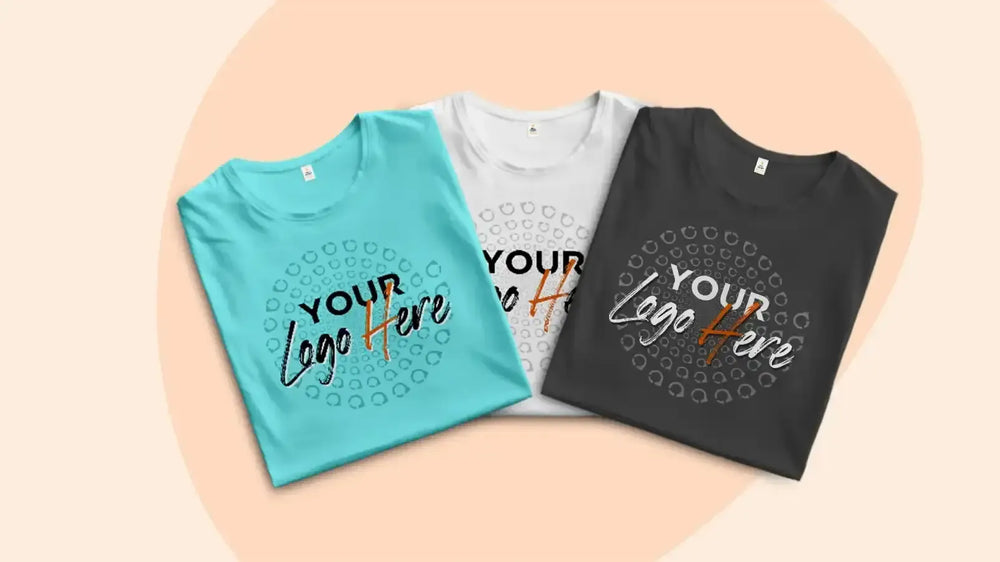
Custom One provides online custom t-shirt printing for customers and projects in Paducah, Kentucky. Eligible orders can range from one custom T-shirt with no minimum to employee apparel, family shirts, recreational clothing, volunteer garments, creator merchandise, event apparel, and larger bulk custom T-shirt orders using original, licensed, or appropriately authorized artwork.
Give the Design a Stress Test before Production
Different apparel projects face different pressures. A company shirt may be worn repeatedly and seen by customers in several settings. A festival design may need to accommodate late sponsor changes. A team order has to remain accurate across names, numbers, sizes, and garments. Historical apparel may be examined by people who know the subject well.
Instead of evaluating only whether a graphic looks attractive on a screen, consider what could challenge it after production. Will small wording remain useful? Could a temporary sponsor be mistaken for a permanent partner? Does an old photograph have reproduction permission? Will a complicated layout still work on youth sizes? Is a historical statement specific enough to be defensible?
A design that performs well under those questions is better prepared for real use.
Paducah Developed because of the Rivers
The Ohio River runs along Paducah's downtown waterfront, while the Tennessee River enters the Ohio just upstream. This strategic position attracted settlement and later supported steamboat transportation, commerce, boat repair, river industries, and regional trade.
Paducah's river identity remains active rather than purely historical. Commercial river traffic continues through the region, and the waterfront remains an important public space. That makes water, navigation, vessels, currents, shorelines, and working-river imagery useful subjects for original apparel.
A designer could create independent confluence lines, vessel silhouettes, rope-inspired patterns, river typography, or creator-owned waterfront photography. Existing navigation charts, government maps, professional photographs, company vessel graphics, maritime organization logos, and another illustrator's river artwork require separate consideration before reproduction.
The Jackson Purchase Connects Paducah with Chickasaw History
Paducah lies within the Kentucky region commonly called the Jackson Purchase. This territory west of the Tennessee River was connected with the Chickasaw Nation before it came under United States control. In the Treaty of October 19, 1818, Chickasaw representatives relinquished lands east of the Mississippi River and north of the Mississippi state line to the United States. The agreement included what became Kentucky's eight westernmost counties.
Andrew Jackson and Kentucky Governor Isaac Shelby negotiated for the United States, while Chickasaw leaders involved in the negotiations included members of the Colbert family, Chinubby, Tishomingo, and others. The United States agreed to pay $300,000 under the treaty.
That history matters when describing Paducah's development. The creation of later counties, land surveys, settlements, transportation networks, and cities occurred after a major transfer of Chickasaw territory. The Chickasaw Nation is a living sovereign Tribal nation; Chickasaw history should not be reduced to decorative “western Kentucky Native” imagery.
Chickasaw seals, language, community-specific symbols, traditional designs, ceremonial imagery, cultural objects, historical cultural materials, and works by identifiable Chickasaw artists may require authorization and appropriate context. Public visibility, historical documentation, museum display, or online availability does not automatically provide cultural authorization or merchandise rights.
Paducah's Name Has Its Own Complicated Historical Record
The settlement was originally known as Pekin. William Clark, known for the Lewis and Clark expedition and later for his work in Indian affairs, platted the town in 1827 and gave it the name Paducah.
Older local accounts and Kentucky historical markers have associated the name with Native people described as Padouca or with a figure called Chief Paduke. Historical terminology surrounding the name has changed over time, and older interpretations should not automatically be treated as a simple statement of modern Tribal identity.
For custom historical apparel, it is safer to distinguish documented local history from cultural material belonging to living Native nations. The city's present geographic name can be used as a place name, but that does not provide permission to invent a generic Native mascot, headdress graphic, pseudo-Tribal symbol, or other stereotyped imagery.
Stress-Test the Printing Method against the Artwork
A suitable printing process should support the actual design rather than forcing every project into one production approach.
Quantity alone does not determine the production method. Fabric composition, artwork detail, image characteristics, print dimensions, placement, personalization, and garment construction can also affect the choice.
River and Rail Created an Industrial Transportation Center
Paducah benefited from steamboat traffic and developed dry-dock and repair activity connected with river transportation. Rail transportation later became another important part of the city's economy, with Paducah serving as a significant railroad center.
These industries provide useful historical subjects for original graphics: independently illustrated towboats, rail geometry, workshop tools, wheel forms, river-and-track combinations, or documented occupations from a family's history.
Railroad logos, bargeline identities, vessel markings, historic advertisements, equipment-company trademarks, archival photographs, and professional transportation imagery should not automatically become independent merchandise assets.
The 1937 Flood Tested Paducah on a Citywide Scale
The Ohio River flood of 1937 became one of the defining natural disasters in Paducah's history. Floodwaters rose above the city's flood stage and inundated extensive areas, demonstrating the vulnerability created by Paducah's riverfront location.
The disaster led to a major federal flood-control response. Paducah's modern floodwall system was constructed between 1939 and 1949. Today the city's flood-control system extends more than twelve miles when its concrete and earthen sections are combined, with pump stations, gates, and other infrastructure forming part of the system.
The floodwall provides an unusually literal example of designing for pressure: its purpose is not merely visual or symbolic. It exists to protect the city from river flooding.
An independent historical shirt can use original water-level graphics, dates, floodwall geometry, river forms, or creator-owned photography. Government engineering drawings, Army Corps graphics, official flood maps, archival photographs, and existing historical illustrations should be evaluated separately before reproduction.
The Floodwall Is Also an Outdoor Historical Canvas
Downtown Paducah's concrete floodwall carries the Wall to Wall murals, a large public-art project depicting episodes from local history. The murals were created by artist Robert Dafford and the Dafford Murals Team and have become a recognizable part of the riverfront.
The fact that the paintings are publicly visible does not make the artwork public merchandise material. A photograph of a mural can involve both the photographer's rights and rights associated with the artwork depicted.
Creators who want a floodwall-inspired design can instead develop original panels, independent historical illustrations, riverfront geometry, or creator-owned photographs that do not reproduce the mural paintings themselves.
Quilting Gives Paducah an International Creative Identity
Paducah has become widely associated with quilting and fiber arts. The National Quilt Museum, founded in the early 1990s, attracts visitors interested in contemporary quilts and fiber art, while major quilting events have brought makers and enthusiasts to the city from many places.
The city's creative reputation extends beyond quilting alone, encompassing artists, galleries, studios, craftspeople, performers, designers, and cultural organizations. Paducah's participation in international creative-city initiatives has further strengthened its association with crafts and folk art.
Quilt-inspired custom apparel requires an important distinction: quilting as a medium can inspire new work, but a specific quilt design is still an artwork. A quilt displayed in a museum, competition, exhibition, book, social-media post, or public event should not be reproduced on a shirt without appropriate rights.
Creators can develop original geometric patterns, independent textile motifs, stitching-inspired lines, fabric-like textures, or their own quilt artwork. Traditional patterns may have complex histories, while contemporary quilts and identifiable artists' compositions can be protected creative works.
Artist Merchandise Should Survive More than Its First Launch
Paducah's arts community gives photographers, illustrators, textile artists, musicians, ceramicists, designers, painters, writers, and other makers many reasons to explore merchandise.
A creator can test whether artwork remains strong when removed from the original medium. A detailed painting may need a different arrangement on a shirt. A photograph may need cropping appropriate to the garment. A textile artist may translate rather than directly reproduce a large fiber piece. A musician can develop original merchandise artwork rather than relying on copied imagery.
Creators testing suitable work can explore create-your-own apparel or customizable T-shirts with no minimum.
Murals, quilts, sculptures, song lyrics, album graphics, professional photographs, museum materials, Tribal cultural material, characters, and works by other identifiable creators can still have rights holders even when publicly exhibited.
Employee Shirts Should Withstand Routine Work without Losing Their Purpose
Paducah serves as a regional center for healthcare, transportation, manufacturing, river industries, construction, restaurants, retail, professional services, tourism, education, creative businesses, and other employers.
A legitimate business can supply its current approved identity. Suitable repeatable company artwork may be considered for custom screen printing, while organizations preparing larger eligible quantities can explore wholesale screen printing.
For everyday apparel, the essential identity should remain understandable without depending on temporary campaign language. Departments, employee roles, or concise service wording can be added when useful.
Standard decorated apparel should not automatically be considered high-visibility clothing, flame-resistant workwear, electrical PPE, chemical-resistant garments, maritime safety equipment, medical PPE, or another specialized occupational product. Employers with technical requirements should verify the specifications of the underlying garment.
Family Designs Can Be Tested against Time
Paducah families may create shirts for reunions, weddings, anniversaries, birthdays, graduations, memorials, retirements, vacations, religious gatherings, and multigenerational celebrations.
A useful family design can still make sense after the event. A surname, family branch, verified date, meaningful phrase, original emblem, or appropriately authorized photograph can give the garment lasting context.
Suitable photographic projects can explore a custom photo T-shirt. Families ordering across generations can also browse custom kids' shirts, custom V-neck T-shirts, and custom hoodies with no minimum.
Professional wedding photography, school portraits, studio images, graduation photographs, newspaper photography, and other third-party images should only be reproduced with appropriate permission.
Stress-Test Personalized Orders Row by Row
Paducah residents participate in baseball, softball, football, basketball, soccer, running, cycling, swimming, golf, fitness programs, youth athletics, and other recreation. Personalized apparel introduces a challenge that common artwork does not: every individual combination can be different.
Suitable projects can explore team T-shirts with numbers and custom names and numbers.
A structured roster can contain participant name, exact printed name, number, garment, size, and quantity. Reviewing each complete row is more useful than confirming names, numbers, and sizes as unrelated lists.
Professional, collegiate, school, league, tournament, race, facility, and event marks may require authorization. Participation, enrollment, attendance, employment, or fandom does not automatically provide merchandise rights to another organization's branding.
Community Apparel Should Withstand Questions about Affiliation
Churches, charities, arts organizations, food programs, youth groups, neighborhood initiatives, health organizations, historical projects, environmental programs, and other Paducah community groups may use apparel for volunteers, fundraising, outreach, or events.
Before printing, imagine someone asking what each logo means. Is the organization an actual sponsor? Is the city officially involved? Did a museum authorize its mark? Is a school a partner, or does a participant simply attend there? Those questions help identify visual relationships that could otherwise imply affiliations that do not exist.
Organizations planning specialized quantities, mixed garments, or production requirements can request a custom apparel quote.
Working with the City of Paducah, McCracken County, Commonwealth of Kentucky, Chickasaw Nation or another Tribal nation, a school, museum, healthcare provider, government agency, nonprofit, emergency service, maritime organization, or business does not automatically authorize reproduction of that organization's seals, logos, cultural materials, badges, uniforms, insignia, or protected marks.
Make the Project Files Survive Revision
A complex Paducah order might contain original artwork, business logos, authorized photographs, quilting references, historical research, Chickasaw-history material, participant names, sponsor identities, garment specifications, and multiple revisions.
Useful labels can include ORIGINAL-ART, APPROVED-LOGO, AUTHORIZED-PHOTO, CURRENT-ROSTER, RIVER-HISTORY-REFERENCE, CHICKASAW-REFERENCE, QUILT-REFERENCE, GOVERNMENT-REFERENCE, SPONSOR-APPROVED, REFERENCE-ONLY, AUTHORIZATION-PENDING, FINAL-ART, and FINAL-PRODUCTION.
Eligible projects can explore design review and repair. Selected graphics may also benefit from an art repair and file recovery service.
Technical cleanup, tracing, rebuilding, cropping, redrawing, vectorization, background removal, or file conversion does not create copyright, trademark, publicity, cultural, Tribal, government, corporate, museum, school, sports, art, or other reproduction rights.
Test the Layout against Every Garment Shape
A Paducah order may include standard tees, youth products, V-necks, tanks, long sleeves, and hoodies. A layout that works on one product can become crowded or awkward on another.
Customers can browse custom T-shirt printing, custom tank tops, custom long-sleeve shirts, custom kids' shirts, custom V-neck T-shirts, and custom hoodies with no minimum.
Necklines, seams, pockets, hoods, fabric composition, and printable dimensions can affect placement. Adjusting artwork to the physical garment can preserve the design's identity without requiring identical dimensions everywhere.
Stress-Test the Deadline with Carrier Transit Included
Employee programs, family reunions, recreational events, volunteer projects, graduations, quilt-related gatherings, performances, fundraisers, business promotions, and merchandise releases can have fixed dates. A deadline plan should include more than production time.
Qualifying projects can explore same-day shipping custom apparel. Same-day shipping means an eligible order is dispatched within the applicable timeframe. It does not mean guaranteed same-day delivery to Paducah, Kentucky.
Artwork readiness, personalization, cutoff times, garment availability, order complexity, production eligibility, destination, carrier schedules, severe weather, and transit conditions can affect arrival. Customers working toward a fixed date should review same-day shipping information and allow appropriate carrier transit time after dispatch.
Create Paducah Apparel That Holds Up under More than a Quick Look
Paducah's own landscape contains examples of things designed to withstand demanding conditions. Its river industries developed around continuous movement and heavy work. The city's flood-control system was constructed after the catastrophic 1937 flood to respond to a physical risk created by its location. Quilters and fiber artists understand that finished work depends on countless individual decisions holding together. Paducah's historical record also requires careful treatment because the modern city developed within the Jackson Purchase, land connected with Chickasaw history before the 1818 treaty transferred control to the United States.
A custom apparel project can receive its own stress test before production. Historical claims can be checked for accuracy. Third-party artwork can be separated from original material. Personalized rows can be reviewed as complete combinations. Business identities can be tested for clarity. Sponsor relationships can be checked for genuine authorization. Artwork can be evaluated across the actual garments being ordered. Deadlines can include transportation instead of ending at dispatch.
Custom t-shirt printing in Paducah, Kentucky can support river-related businesses, manufacturers, healthcare organizations, contractors, restaurants, retailers, professional services, artists, quilters, families, schools, churches, nonprofits, volunteers, recreational groups, photographers, musicians, makers, historical projects, cultural organizations, and independent brands. Eligible orders can range from one personalized garment to bulk apparel involving multiple products, sizes, names, numbers, departments, sponsors, and participant roles.
Custom One provides online options for screen printing, DTG, DTF, heat transfer vinyl, photo shirts, custom names and numbers, no-minimum apparel, and bulk printing. Original or appropriately authorized artwork, accurate Paducah and Jackson Purchase history, respectful treatment of Chickasaw and other relevant Indigenous histories and cultural material, responsible handling of quilts, murals, government, museum, school, corporate, maritime, sports, historical, and third-party assets, organized project files, garment-aware layouts, and realistic shipping expectations can help create Paducah apparel that continues to hold together when the project moves from a digital preview into the real world.